




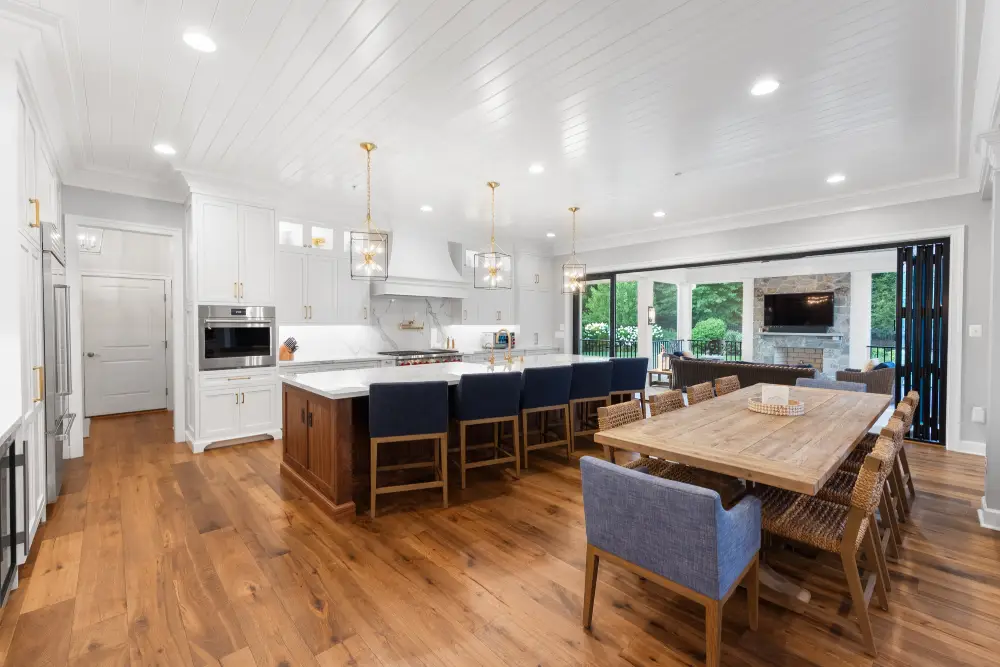
The kitchen remains the heart of the home, but in 2026, it is evolving from a mere showpiece into a truly livable, multifunctional hub. Particularly in Maryland—where multigenerational floor plans, historical home restorations, and indoor-outdoor living are reshaping family spaces—homeowners are shifting their focus. They aren’t chasing “magazine perfection” anymore; they are seeking designs that support the rhythms of real daily life: cooking, working, gathering, and quiet moments.
1. Intentional Zoning vs. The “Open Concept”
One of the biggest shifts we’ve seen is a move toward layered, intentional layouts. While the massive open-concept kitchens of the 2010s were popular, they can often feel chaotic in a world of remote work and busy households. The goal is to be together in an environment that shifts with ease between the essentials needs, and the desire to enjoy being in the heart of the home.
Today, clients are requesting “zoned” designs:
- Primary Prep Areas: Centered around a generous (but appropriately scaled) island.
- The Hidden Scullery: A “messy kitchen” or scullery vs. pantry design is trending in high-end kitchen additions to keep main counters clear during entertaining.
- Command Centers: Adjacent nooks for homework or coffee that transition into a mudroom layout for high-traffic families.
- Aging in Place: A rise in main-level living designs ensures these zones remain accessible and flexible for decades to come.
2. The Return of Warmth and Craftsmanship
The era of the “all-white kitchen” is fading. Many homeowners now find them difficult to maintain and emotionally “cold.” In their place, we are seeing a dramatic shift toward natural materials:
- Warming Up: Stained walnut, oak, and reclaimed woods paired with earthy quartzites.
- Color Accents: Deep green or navy island bases contrasted with lighter perimeter cabinetry.
- Artisan Details: Inset cabinetry, handmade terra-cotta tiles, and arched range hoods add a sense of craftsmanship.
These elements are particularly effective in historical home restorations, where blending modern utility with a home’s original character is essential.
3. Smart Integration and Seamless Technology
In 2026, technology is “invisible.” Panel-ready appliances allow refrigerators and dishwashers to disappear into the cabinetry, while smart home features—like voice-activated faucets and hidden under-cabinet charging strips—address everyday needs without the clutter.
We are also seeing a rise in biophilic design. For our clients in the Chesapeake Bay Area, this means using large sliding doors to create a seamless indoor-outdoor living flow, turning the kitchen into an entertainer’s dream that celebrates Maryland’s waterfront views.
The Result: Personal, Not Performative
The 2026 kitchen is a space where families actually linger. Whether you are looking for a suburban modern lifestyle update or a custom Bay-front retreat, the goal is a pragmatic evolution that rewards thoughtful planning over “flash.”
At Jonathan Rivera Architecture, we specialize in creating homes that adapt over decades. We have designed primary residences on the Eastern Shore of Maryland, to retreats in Deep Creek Maryland, and everything in between. The kitchen is a key focal point so the client’s desires, along with the best functionality, must be well considered as the entire footprint unfolds. If you are considering a kitchen renovation, a home addition, or a new custom build, let’s discuss how to bring these trends into your home.
Contact Jonathan Rivera directly at 443.226.5745 or email JRivera@JonathanRivera.com to begin a conversation.